
Hands-on nature projects are a gamechanger for men’s wellbeing, research finds
University of Stirling experts reveal the ‘three Ps’ that lift men’s moods: purpose, practicality and peer support
/filters:format(webp)/filters:no_upscale()/prod01/cdn/media/stirling/news/news-centre/2026/sep-26/Glenochil-1200X630.jpg)
Group outdoor activities can have a positive effect on men's mental health – but they are most powerful when men are feeling useful, says new research from the University of Stirling.
It found that men’s wellbeing is lifted most when nature-based activities include the ‘three Ps’: purpose, practicality and peer support.
Evidence shows that men are more likely than women to face social challenges such as homelessness and incarceration, are more prone to certain mental health challenges, and are more likely to have substance use disorders and to die by suicide. Providing appropriate nature-based interventions for men can have a positive impact on their wellbeing.
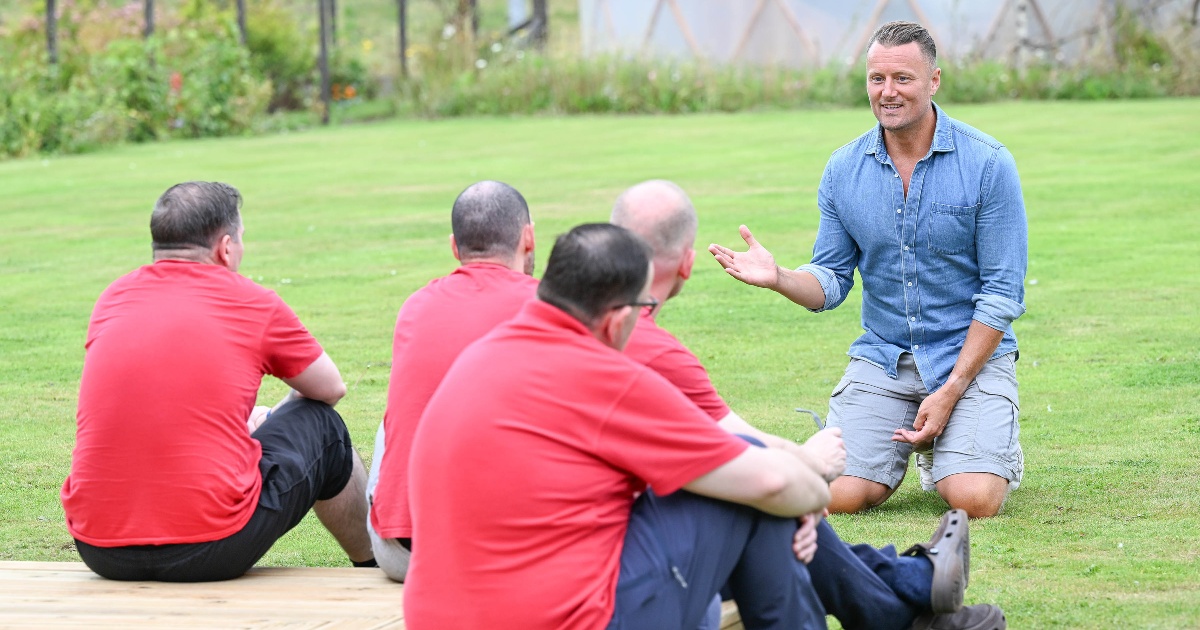 Josh Dumbrell visited HMP Glenochil in Clackmannanshire, where prisoners are engaging in nature-based activities in support of their wellbeing thanks to an initiative inspired by University of Stirling research.
PhD researcher Josh Dumbrell, funded by The Salvation Army and based at the University of Stirling’s Salvation Army Centre for Addiction Services and Research (SACASR), led a review of 46 existing studies from nature-based programmes worldwide, including Men’s Sheds in Australia, Walking Football in Scotland and forest therapy in Japan to understand what works, for whom and in what circumstances for nature-based interventions for men.
Nine core programme theories were developed, all pointing to the same conclusion: that a mix of calming natural spaces, clear jobs to do, and a “shoulder-to-shoulder culture” gave men participating in nature-based activities confidence, social connection and a sense of purpose.
Josh said: “Men often want to do something and feel useful before they will open up. Give them a path to build, trees to plant or a team to coach and they relax, bond and keep showing up. That’s when wellbeing really shifts.
“The shoulder-to-shoulder culture – peer-led support that trades big group talk for shared graft – is highly important, as are participants seeing visible wins. If sessions feel unstructured, judgemental or aimless, engagement fades away and the wellbeing gains fade.”
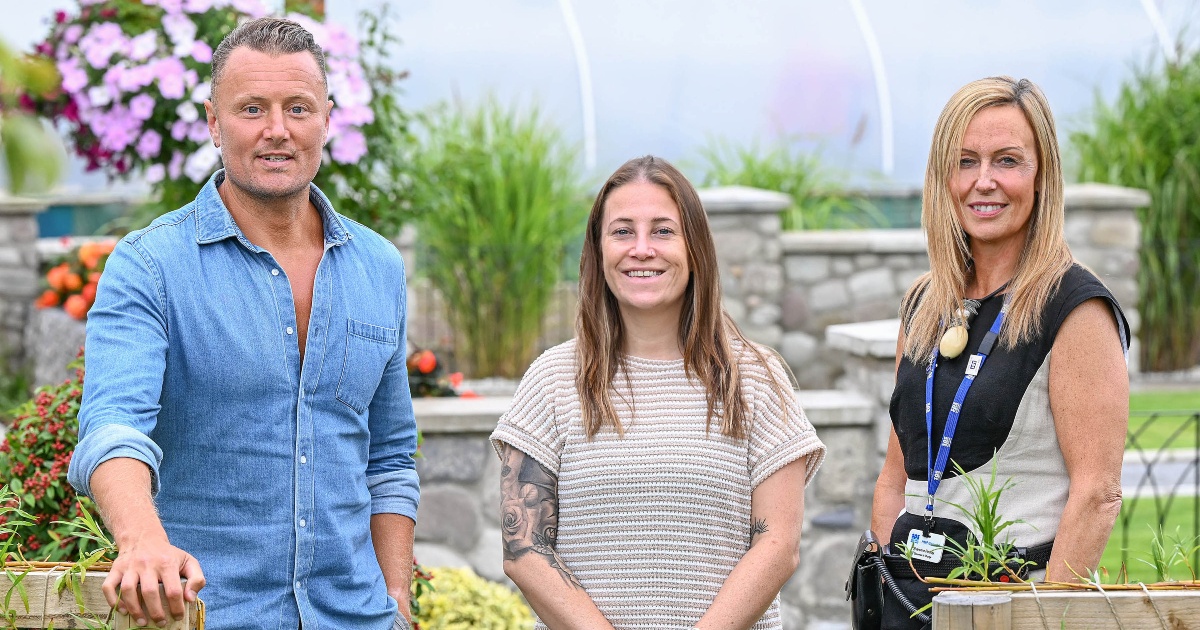 University of Stirling researchers Josh Dumbrell and Dr Wendy Masterton with HMP Glenochil Governor Sharanne Findlay.
One nature-based wellbeing programme that supports the findings is currently in operation at HMP Glenochil in Clackmannanshire. The pilot programme is encouraging prisoners to carry out projects in the garden space, including learning about horticulture, planting and breaking down and rebuilding a beehive. They also use the space for yoga and mindfulness.
Sandy Douglas, Health and Wellbeing First Line Manager, set up the Greenspace project at the prison. He said: “I developed the programme using green space wellbeing resources that the University of Stirling helped design, and the results have been extremely positive.
“Access to outdoor space is often limited in the prison environment, which is why programmes like this are so important. Participants have the opportunity to learn new skills and work together to achieve shared goals. The benefits have been clear, with groups reporting reduced stress levels and improvements in their mental health.
“To hear someone say, ‘I haven’t walked on grass for years’, and then watch them learn how to create and care for this beautiful space is incredibly rewarding for everyone involved.”
Josh is using the research findings to co-create other opportunities for nature-based activities, with professionals and men who have lived experience of homelessness and substance use.
Nature-based programmes
The study is the latest in a series of research projects by the University of Stirling investigating the value of outdoor space for people recovering from poor mental health and substance use. SACASR recently developed guidance to help health and social care providers design and deliver nature-based programmes that promote health through activities such as gardening, conservation and forest walks.
The Salvation Army Centre for Addiction Services and Research was established in February 2017 to take forward collaborative research and knowledge exchange in the area of homelessness and substance use between The Salvation Army and the University of Stirling.
Realist review of nature-based interventions for men: understanding the contexts and mechanisms necessary for successful outcomes, is published in BMC Public Health.