Stirling research to analyse revolutionary golf tee
The study will provide an independent assessment of BirTee Pro Speed+ golf tees
/filters:format(webp)/filters:no_upscale()/prod01/cdn/media/stirling/news/news-centre/2026/oct-26/2-Abby-Nisbet-1200X630.jpg)
A new study led by the University of Stirling will examine the effectiveness of an invention that challenges one of golf's most familiar pieces of equipment – the tee.
Developed by golf equipment company BirTee Golf International Inc. the innovative tee, which has been approved by the R&A, sits on top of the ground rather than being pushed into it.
Its performance and reliability will be analysed by experts at the University of Stirling’s School of Sport, with support from golf scholars and Dean Robertson, Head of Golf at the University of Stirling, who recently captained Great Britain and Ireland to a historic Walker Cup win.
Led by Dr Lewis Macgregor, Lecturer in Physiology and Nutrition in the Centre for Research and Innovation in Sport (CRIS), the study will provide an independent assessment of the variability and consistency of golf drives played using BirTee Pro Speed+ golf tees, compared with traditional tees.
Originally developed to help golfers with mobility challenges, the reusable plastic tee allows players to position the ball at different heights without having to push a tee into the ground.
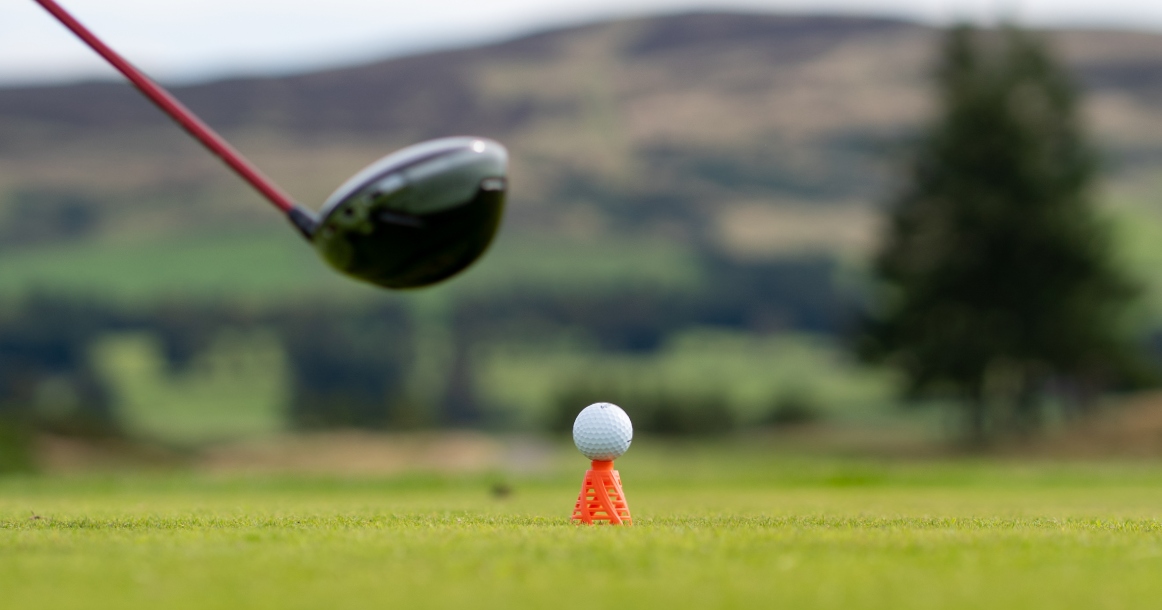
Its ease of use has driven growing adoption among golfers, particularly in indoor simulator environments and during winter months when frozen ground can make traditional tees difficult to use. The company is now aiming to increase use on courses across the world.
The University research will examine both between-shot and between-day variability in drive performance when using different BirTee Pro Speed+ tees, and traditional tees.
Seven golf scholars and seven recreational players will participate in the study. Each golfer will hit a series of drives under three conditions: using two BirTee Pro Speed+ tees of varying heights – size 4 (one inch) and size 8 (two inches) – and a traditional tee.
Tests will be carried out at the University’s state-of-the-art Golf Studio and repeated approximately one week later to evaluate consistency between sessions.
Researchers will analyse a range of performance measures including clubhead speed, ball speed, smash factor, launch angle, spin rate, carry distance and total distance. The findings will help determine whether the new tees provide comparable performance reliability to traditional tees while offering additional practical benefits for golfers.
Dr Lewis Macgregor said: “BirTee Pro Speed+ tees are an interesting innovation, yet there is currently very little independent research examining its performance characteristics. This partnership gives us an opportunity to generate robust scientific evidence on the reliability and consistency of the product under controlled conditions.
“Our study will compare key performance outcomes across a range of golfers and tee types, helping us better understand whether the new tees influence driving performance and variability. The findings will be useful not only to golfers and coaches, but also to the wider golf industry.”
The partnership builds on the University of Stirling's internationally recognised reputation for golf research, coaching and athlete development.
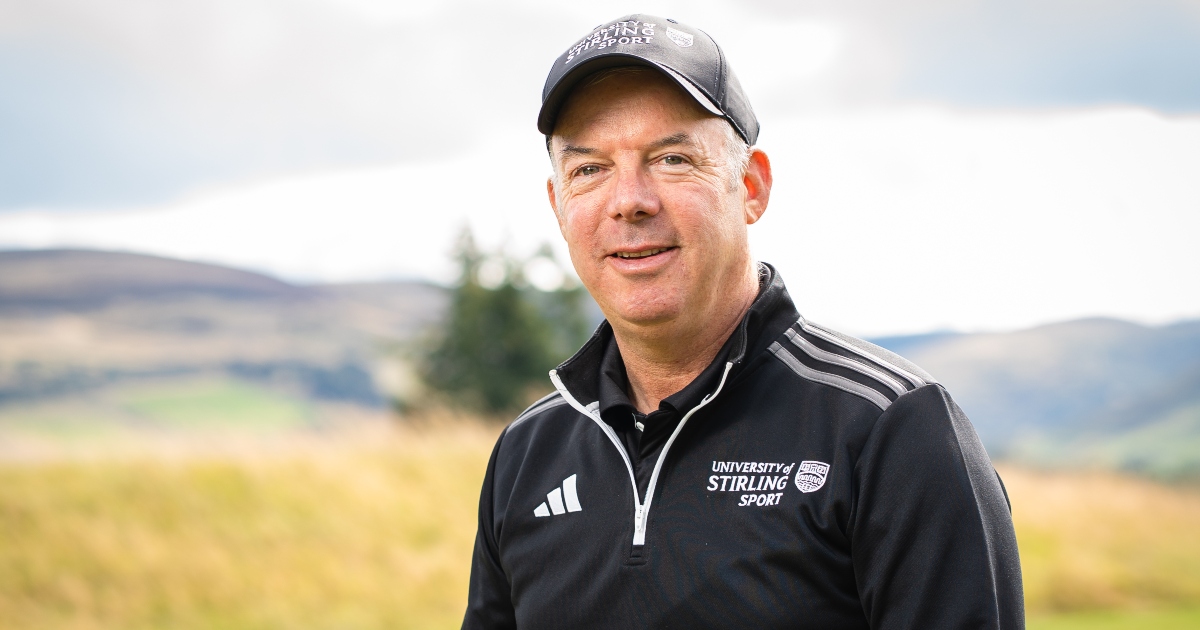 Dean Robertson
Dean Robertson, Head of Golf at the University of Stirling, said: “BirTee Pro Speed+ have become a valuable addition to our practice environment at Stirling. While their practicality is obvious, particularly for indoor golf and winter conditions, I also see significant value in the variability they offer from a coaching and player-development perspective.
“The ability to easily alter tee height allows players to work on different skills and develop a wider variety of ball flights, while also encouraging them to adapt to different challenges. They provide a simple way of creating variability in practice while still allowing players to hit quality shots and work on specific skills.
“I also think there is a wider benefit for golfers of all ages. For older golfers in particular, the simplicity of being able to tee the ball up and have it securely balanced without having to push a conventional tee into hard or frozen ground could make the game more accessible and enjoyable. Sometimes the simplest ideas are the most effective, and the BirTee Pro Speed+ tees are a great example of that.”
Abby Nisbet, a University of Stirling golf scholar, uses BirTee Pro Speed+ tees when practising. She said: “They allow me to keep developing my skills regardless of the environment or weather, which is vital as an elite athlete. Their simplicity and practicality provide excellent variability and the opportunity to keep hitting quality shots when we otherwise might not be able to.”
.jpg) Abby Nisbet
Abby Nisbet
The research is expected to provide new insights into equipment consistency and performance, helping golfers, coaches and manufacturers better understand the role that alternative tee designs can play in both recreational and elite golf.
Mario Caya, President and founder of BirTee Golf International Inc., said: “Our partnership with the University of Stirling originated through a visit to the campus and the Golf Studio, where discussions highlighted an opportunity for independent research into the performance of BirTee Pro Speed+ tees. We are delighted to support this study, which will provide valuable insight into the consistency and performance of our product and help golfers, coaches and the wider industry better understand the benefits of innovative equipment.”
David Bond, Director of Performance Sport at the University of Stirling, said: “From the first time I met BirTee Golf International Inc. founder Mario Caya, I was impressed by the thought and attention to detail that had gone into the BirTee Pro Speed+ tees. The more we spoke, the clearer it became that there was an opportunity to partner with the University because we share a commitment to innovation, supporting the development of golfers, and using research to better understand and improve the game. This partnership brings those strengths together, creating opportunities for our scholars while helping to generate independent evidence that could benefit golfers around the world.”