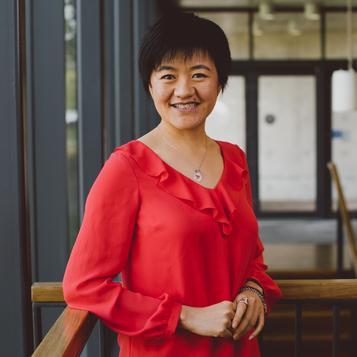
Li Li is a Lecturer in Interpreting and Translation Studies at the University of Stirling. She completed her AHRC-funded PhD at the University of East Anglia, examining maternity interpreting services in UK healthcare settings. A native speaker of Mandarin Chinese, she is also a professionally qualified and experienced interpreter and translator working between Chinese and English.
Her research conceptualises healthcare interpreting as a socio-technical and organisational system. She investigates interpreting modality decision-making, workforce sustainability, equitable language access, and the implementation of video-mediated and emerging digital language technologies. Drawing on mixed-methods research and sociological and implementation-science frameworks, her work examines how institutional structures, policy and commissioning arrangements, professional practices and technological infrastructures shape interpreter-mediated healthcare, and why innovations succeed or fail within complex service environments.
Her research has informed Royal College of Obstetricians and Gynaecologists standards on cross-cultural communication in maternity care. She is Principal Investigator of an ESRC-funded Stirling Ambitious Impact Award project developing research-informed perinatal interpreting training with NHS, community and professional partners.
She is Programme Director for the HNU–Stirling Joint BA (Hons) Translation and Interpreting Programme and serves as a Practitioner Non-Executive Director of the National Register of Public Service Interpreters.
My research examines how spoken-language interpreting, translation and multilingual communication are organised, governed and implemented within healthcare and public-service systems. I am a native speaker of Mandarin Chinese and a professionally qualified and experienced interpreter and translator working between Chinese and English. This linguistic and professional expertise informs my research into interpreting-mediated communication and institutional practice.
I am particularly interested in how policy, commissioning, workforce conditions, professional practice and technologies—including video-mediated, digital and AI-supported tools—interact to shape communication, safety and equitable access to services.
My research interests include:
- Healthcare and perinatal interpreting systems
- Interpreting and translation across languages, with particular expertise in Chinese–English
- Language access, health inequalities and patient safety
- Remote and video-mediated interpreting
- Digital and AI-supported translation and interpreting technologies
- Policy, commissioning and institutional decision-making
- Interpreting workforce sustainability and professional practice
- Implementation and evaluation of language-access innovations
- Multilingual and inclusive research methods
Practitioner Non-Executive Director, National Register of Public Service Interpreters (NRPSI)
National Register of Public Service Interpreters
Practitioner Non-Executive Director on the Board of the National Register of Public Service Interpreters (NRPSI) since 2026, contributing to organisational governance and the maintenance of professional standards in public service interpreting. This builds on sustained service to NRPSI as a member of its Code of Professional Conduct Review Working Group (2023–present) and Disciplinary Committee (2019–2026).
Cambridge CELTA (Certificate in Teaching English to Speakers of Other Languages)
Diploma in Public Service Interpreting (English Law)
Diploma in Translation (EN-ZH)
Fellow (FHEA), Advance HE (fomerly Higher Education Academy)
Higher Education Academy
Higher Education Teaching Qualification, China
Perinatal Interpreting Training
Dr Li Li is a Fellow of the Higher Education Academy and brings extensive experience of teaching interpreting, translation, Chinese language and intercultural communication in UK higher education. Before joining the University of Stirling, she taught at the University of Birmingham and served as Course Director for the MA Conference Interpreting and Translation at the University of Essex.
At Stirling, she is Programme Director for the HNU–Stirling Joint BA (Hons) Translation and Interpreting Programme. She teaches and coordinates undergraduate modules in interpreting skills, practical translation, professional development, Chinese language and culture, and cross-cultural communication. She supervises undergraduate and postgraduate dissertations and PhD researchers. She also contributes to doctoral assessment through initial and annual progress reviews and viva preparation.
Drawing on her professional experience as a Chinese–English interpreter and translator, her teaching integrates research, professional standards, reflective practice and emerging interpreting and translation technologies. She aims to prepare students to respond critically and effectively to changing professional and institutional contexts.